Janda Mantee Fonts Embroidery Design: A Practical Evaluation for Personalized Text
For hobbyists and professionals alike, the ability to integrate custom text into machine embroidery projects is a critical skill. Whether you are monogramming linens, creating commemorative patches, or branding apparel, the choice of font dictates the final aesthetic and technical success of the design. Janda Mantee Fonts Embroidery Design stands out as a versatile resource for those seeking to add names, dates, or quotes to various fabrics. This evaluation explores the characteristics of this specific font set, its technical specifications, and how it fits into the broader landscape of digital embroidery resources.
Understanding the Core Characteristics of Janda Mantee Fonts
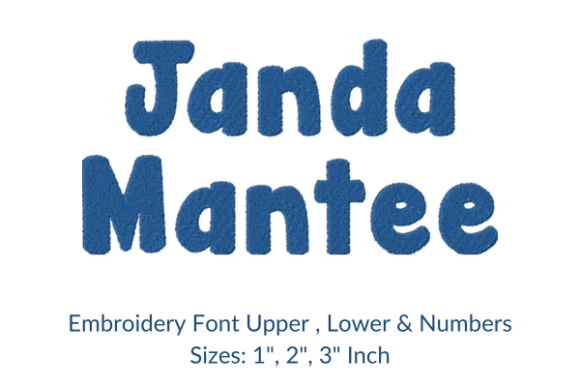
The primary value proposition of Janda Mantee Fonts Embroidery Design lies in its adaptability and completeness. Unlike single-character downloads that require piecing together letters manually, this package provides a comprehensive set of 204 letters. This extensive library ensures that users have access to standard uppercase and lowercase characters, numbers, and necessary punctuation marks required for most personalization tasks.
What distinguishes this design from generic system fonts converted for embroidery is the attention paid to stitch density and pull compensation. In machine embroidery, text must be constructed to withstand the tension of the stitching process without distorting on different fabric types. The Janda Mantee style utilizes a balanced stitch structure that maintains legibility even at smaller sizes, which is often a challenge with more ornate or script-based alternatives. The design allows for the creation of professional-looking lettering that remains crisp whether stitched on a heavy canvas tote bag or a delicate cotton shirt.
Technical Specifications and Dimensional Data
When evaluating any embroidery file, understanding the physical dimensions and stitch counts is essential for project planning. For Janda Mantee Fonts Embroidery Design, the provided metrics typically reference the dimensions of the capital "A" and lowercase "a" in each available size. These serve as a baseline summary for the entire set. However, relying solely on these two characters can sometimes lead to miscalculations regarding hoop space or thread consumption for longer words.
Because the full dimension details for all 204 letters vary slightly based on character width (for example, an "i" requires significantly less horizontal space than an "m"), users are advised to consult the detailed documentation included with the download. The package includes a "More Sewing Info PDF" button which grants access to the complete dimensional breakdown. This level of transparency is crucial for designers who need to fit text into tight spaces, such as inside a logo patch or along a curved neckline, where precise millimeter measurements determine the difference between a successful run and a jammed needle.
Comparing Janda Mantee Fonts to Alternative Approaches
In the realm of machine embroidery, there are several ways to achieve custom text. Some embroiderers rely on built-in fonts within their machine's firmware, while others use third-party software to convert vector graphics into stitch files. Comparing Janda Mantee Fonts Embroidery Design to these alternatives reveals distinct tradeoffs regarding quality, control, and ease of use.
Built-in Machine Fonts: Most modern embroidery machines come with a selection of pre-loaded fonts. While convenient, these are often limited in variety and may lack the refinement of dedicated design files. Built-in fonts can sometimes suffer from inconsistent spacing or lower stitch counts that result in a "blocky" appearance. In contrast, the Janda Mantee set offers a curated look that is generally superior in terms of finish and professional appeal.
Software-Generated Fonts: Many enthusiasts use digitizing software to create text on the fly. This approach offers infinite flexibility but requires a high degree of technical skill. Poorly digitized text often results in excessive backtracking, unnecessary trims, or uneven density. Using a pre-digitized set like Janda Mantee Fonts Embroidery Design removes the guesswork. The stitches have already been optimized by a professional, ensuring that the running lines and satin columns work together harmoniously. This is particularly beneficial for users who prioritize efficiency over the creative process of digitizing every letter individually.
Evaluating File Format Compatibility
A significant factor in choosing an embroidery resource is compatibility with existing hardware. One of the strengths of this particular design package is its inclusion of multiple file formats. Embroidery machines from different manufacturers—such as Brother, Janome, Bernina, Pfaff, and Singer—often utilize proprietary file extensions. Downloading a design that only supports one format can render it useless for a multi-machine household or business.
The versatility of Janda Mantee Fonts Embroidery Design ensures that the same lettering can be used across a diverse range of equipment without the need for conversion software. This broad compatibility reduces friction in the workflow, allowing users to switch between machines for different projects without worrying about file errors or formatting issues. It represents a practical solution for those managing a fleet of machines or collaborating with other embroiderers who may own different brands.
Strengths, Limitations, and Decision Factors
While Janda Mantee Fonts Embroidery Design offers numerous advantages, it is important to weigh them against potential limitations to determine if it is the right tool for a specific project.
Key Strengths
- Consistency: The uniformity across all 204 characters ensures that mixed-case text looks cohesive.
- Efficiency: Pre-digitized files save time compared to manual letter-by-letter creation.
- Fabric Versatility: The stitch structure is designed to perform well on a wide array of materials, from woven cottons to stable knits.
- Comprehensive Documentation: Access to detailed PDF information helps prevent sizing errors before stitching begins.
Potential Tradeoffs
- Fixed Style: Unlike software-generated text, the style is fixed. If a project requires a unique, hand-drawn aesthetic that differs from the Janda Mantee style, this font may not suffice.
- Sizing Constraints: While available in multiple sizes, extreme scaling beyond the intended parameters can affect stitch density and quality. Users must adhere to the recommended size ranges for optimal results.
Best-Fit Situations and Use Cases
Determining when to use Janda Mantee Fonts Embroidery Design depends largely on the nature of the project. This font set is ideally suited for situations requiring clean, legible, and professional text.
Personalized Gifts and Keepsakes: For items like baby blankets, wedding napkins, or anniversary towels, the clarity of the font ensures that names and dates are easily readable. The balanced stitch count prevents the fabric from puckering, which is a common issue with dense, poorly optimized text designs.
Small Business Branding: Entrepreneurs creating branded merchandise can utilize this font for logos, slogans, or employee names on uniforms. The availability of multiple file formats makes it easy to distribute the design to various production partners or use across different shop floors.
Quilting and Home Decor: When adding inspirational quotes or family names to quilt blocks or wall hangings, the Janda Mantee style provides a classic look that complements traditional patterns without overpowering them.
When to Consider Alternatives
There are scenarios where this specific font might not be the best choice. If a project demands a highly stylized, calligraphic, or distressed look, a more specialized script font or a custom-digitized design would be more appropriate. Additionally, for extremely small areas where the minimum stitch size of the Janda Mantee font exceeds the available space, a micro-font alternative might be necessary. Similarly, if the project involves very unstable fabrics that require minimal anchoring, a design with a different underlay strategy might yield better results.
Conclusion: Making an Informed Choice
Selecting the right embroidery font is a balance between aesthetic preference and technical feasibility. Janda Mantee Fonts Embroidery Design offers a robust, reliable option for those who need high-quality, consistent lettering without the overhead of learning complex digitizing software. Its comprehensive character set, multi-format support, and clear documentation make it a strong contender for both casual crafters and professional studios.
By understanding the specific dimensions, stitch counts, and stylistic boundaries of this font, users can effectively integrate it into their workflows. While it may not replace the need for custom digitizing in every scenario, it serves as an excellent foundation for the majority of personalization projects. Ultimately, the decision to use this resource should be based on the specific requirements of the fabric, the desired visual impact, and the capabilities of the embroidery machine being used.